
Tradition and Lineage
The Nyingma tradition of Tibetan Buddhism
Nyingma Buddhism is the oldest tradition of Tibetan Buddhism. Present in Tibet since the seventh century, it became firmly established there with the arrival of the great master Padmasambhava (the "Lotus-born"), and it has also taken root in Bhutan, in the various Himalayan regions, and now all around the world. It is a living tradition of boundless richness and depth that is not only for monks and nuns, but also for yogis and yoginis as well as lay practitioners.
The tradition of Padmasambhava (also known as Guru Rinpoche) has a timeless freshness that makes it relevant for people of all cultures and backgrounds, and helps us deal with the difficulties of our time. Moreover, Nyingma Buddhism includes all the major categories of traditional teachings, from the most accessible to the most advanced. It skillfully integrates the three pillars of study, reflection and meditation as well as a wide range of Vajrayana methods, including extraordinary sounds and images (mantras, visualizations).
The main teachers we recommend are especially affiliated with the Dudjom Tersar and Longchen Nyingtik lineages of Nyingma Buddhism, but we take a non-sectarian approach, respecting all authentic schools and lineages of wisdom.
Early Buddhas
Shakyamuni Buddha
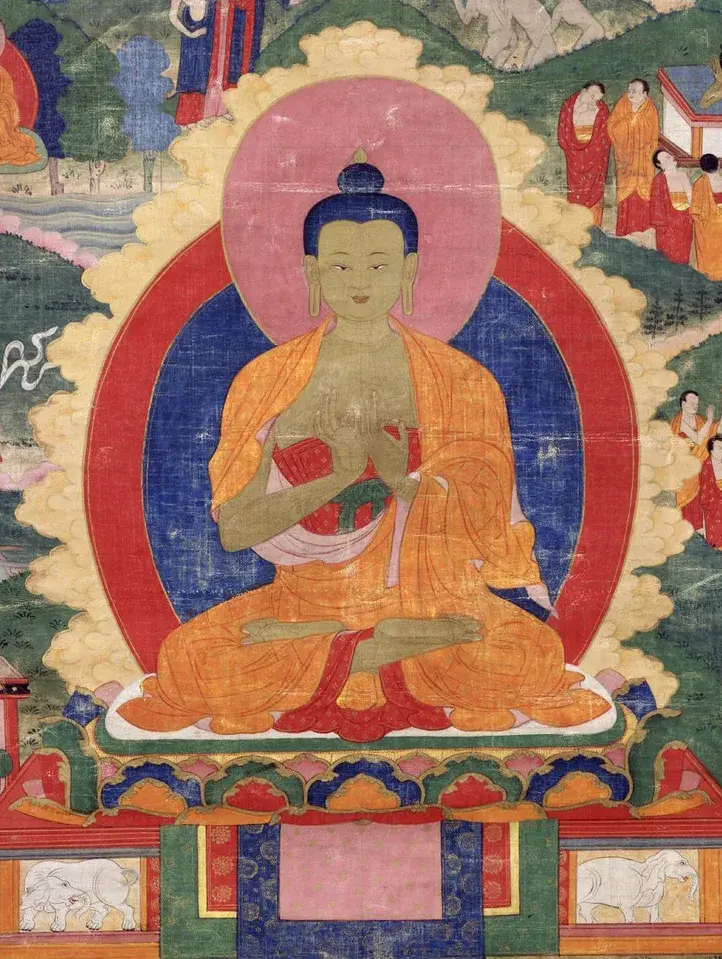 Credit: Rubin Museum of Art via Himalayan Art Resources
The "Sage of the Shakya clan," historical Buddha, born in Lumbini in the 6th century BC. Siddhartha Gautama was an Indian prince who, shocked by his realization of human suffering, embarked on a spiritual path that led him to full awakening. He taught extensively—for decades, in different parts of India and what is now Nepal—a path followed by millions of people around the world that is now called "Buddhism." All Buddhist schools and traditions pay homage to him and take him as their guide.
Guru Rinpoche
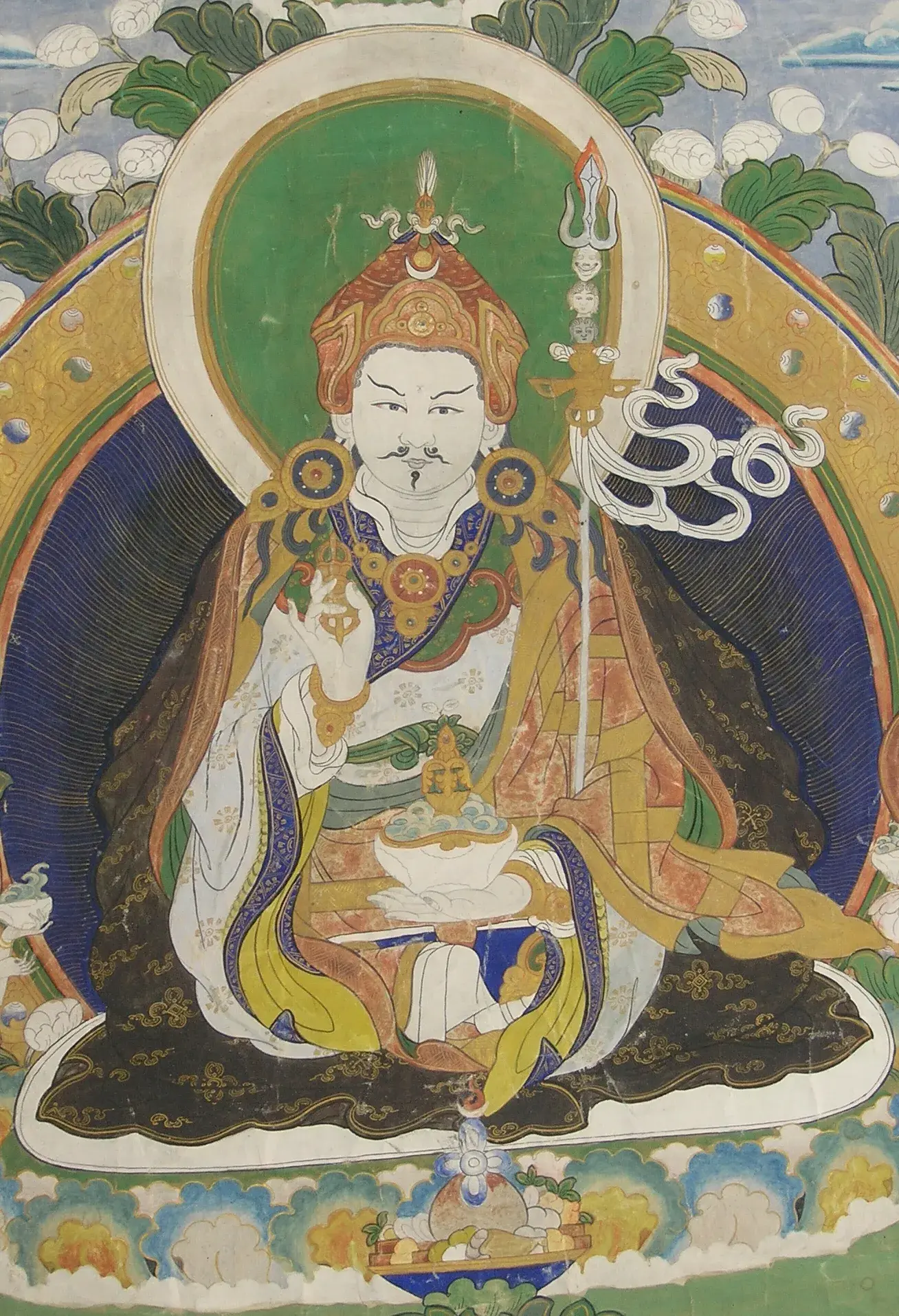 Credit: Auckland Museum
Padmasambhava ("Lotus-born") is an enlightened master, called "Precious Guru" or "Second Buddha" by Tibetans and practitioners in the Himalayas. With the assistance of Abbot Shantarakshita and King Trisong Detsen, he played a leading role in the establishment of Buddhism in Tibet in the 8th century. Nyingma practitioners see him as the focal point of all sources of refuge, the awakened master par excellence, and consider that his wisdom mind continues to ensure the transmission of the Vajrayana. He is known as "the Buddha for our time," with innumerable manifestations and an undeniable power of blessings.
Yeshe Tsogyal
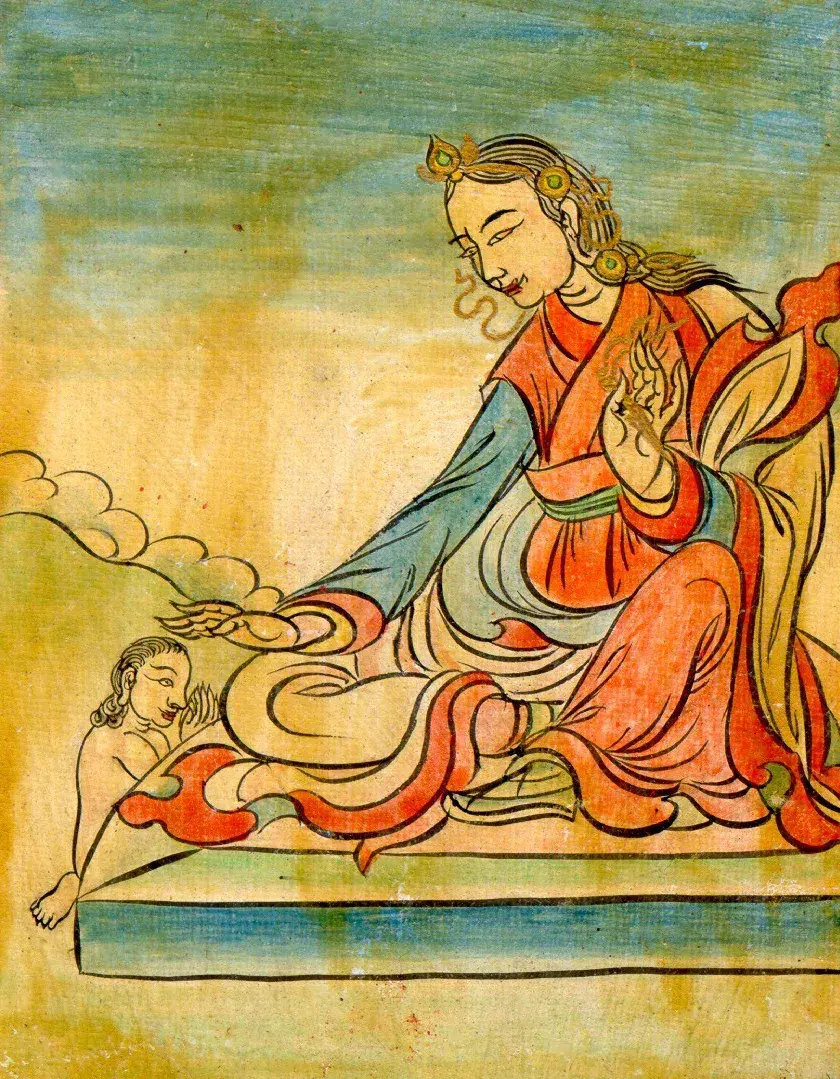 Credit: Shechen Archives via Himalayan Art Resources
She is one of Guru Rinpoche's main companions, so much so that in Nyingma iconography, one does not go without the other, if only implicitly. Enlightened Dakini, endowed with—among other innumerable qualities—an unfailing memory, unshakable courage and boundless compassion, she played a decisive role in the establishment, transmission and preservation of the Dharma. In particular, she helped hide Guru Rinpoche's spiritual treasures. She is a great source of inspiration for practitioners.
Preeminent Figures of the Previous Centuries
Some of the enlightened masters of the Nyingma tradition.
Omniscient Longchenpa (1308–1364)
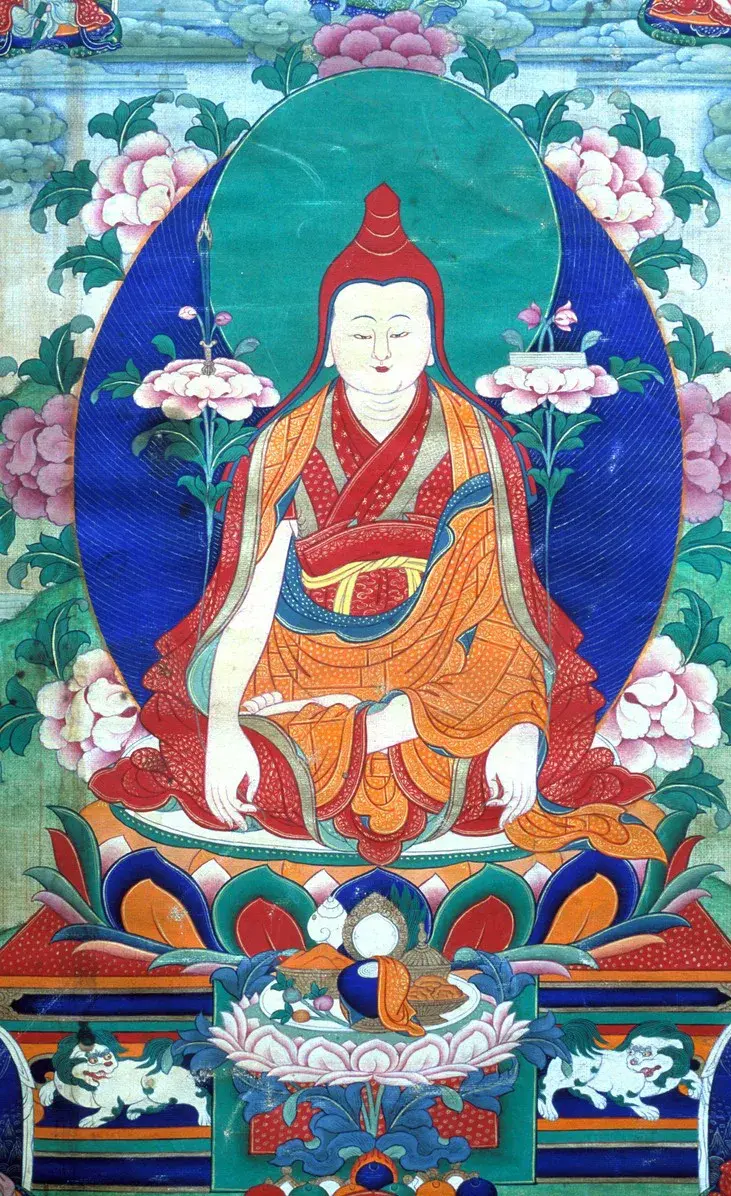 Credit: Himalayan Art Resources
Also known as Longchen Rabjam and Drimé Özer. After Padmasambhava, he is one of the most important masters in the Dzogchen or Great Perfection lineages (the highest teachings of Nyingma Buddhism). His unparalleled erudition and incredible spiritual accomplishment enabled him to systematize the many teachings of the ancient tradition. His work is prolific (he is credited with nearly 250 books) and is largely aimed at advanced practitioners who are accompanied by a qualified master.
Omniscient Jigme Lingpa (1730–1798)
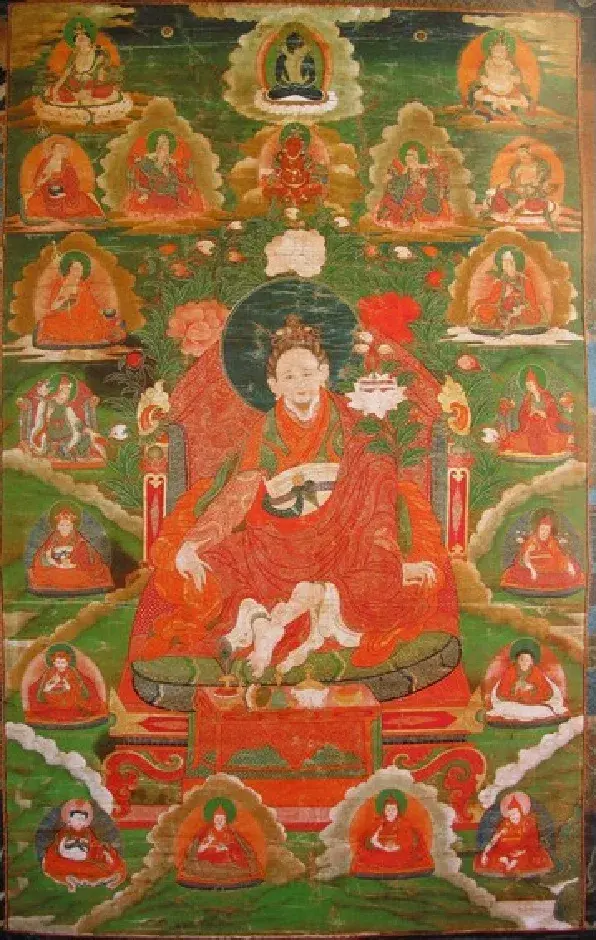 Credit: Himalayan Art Resources
This wondrous, accomplished master—a perfect example of a scholar-yogi—was the revealer of the Longchen Nyingtik cycle (also spelled Longchen Nyingthig, "The Heart Essence of the Vast Expanse"), which he received directly from Longchenpa in a series of visions. This extremely voluminous cycle is particularly widespread and highly regarded in the Nyingma tradition. Many of the texts he wrote or compiled are quoted by the greatest masters and used daily throughout the world.
Patrul Rinpoche (1808–1887)
An "Enlightened Vagabond" (this is the title of a magnificent book about him edited by Matthieu Ricard), Patrul is a great master of compassion who declined important positions in order to devote himself to itinerant practice. An example of humility and selflessness, he has greatly contributed to the popularity of the Bodhicharyavatara, Shantideva's classic which he has taught over a hundred times. His self-deprecation and simple lifestyle should not obscure his astonishing erudition (he knew by heart a number of texts and mastered the nuances of the various philosophical systems), nor his unwavering inner realization of the highest teachings. He also contributed to the rise of the non-sectarian movement (rimé, in Tibetan) and to an important revival with his companions Jamyang Khyentse Wangpo and Jamgön Kongtrul Lodrö Thayé.
Dudjom Lingpa (1835–1904)
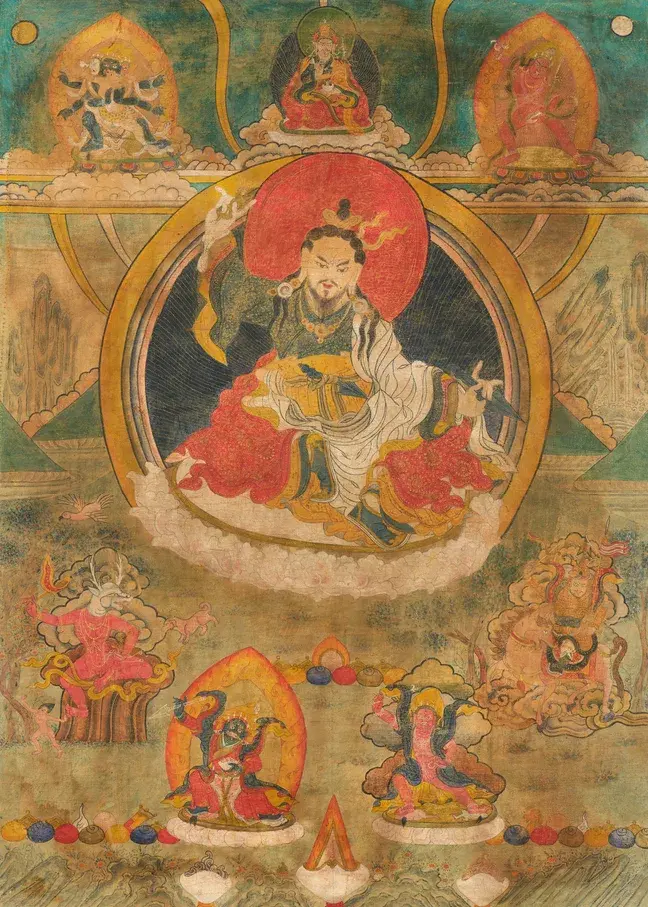 Credit: Himalayan Art Resources
A great Nyingma master with a most unusual life story, and an important tertön ("discoverer of treasures") whose revelations amount to twenty volumes, Dudjom Lingpa is considered to be an emanation of Khye'u Chung Lotsawa, one of Guru Rinpoche's twenty-five closest disciples. He is also the predecessor of Dudjom Rinpoche, Jigdral Yeshe Dorje (see below). Among other extraordinary facts, he is the father of eight eminent tulkus, including the third Dodrupchen Rinpoche (Jigme Tenpe Nyima) and an incarnation of Patrul Rinpoche (Patrul Namkha Jigme).
Jamgön Mipham Rinpoche (1846–1912)
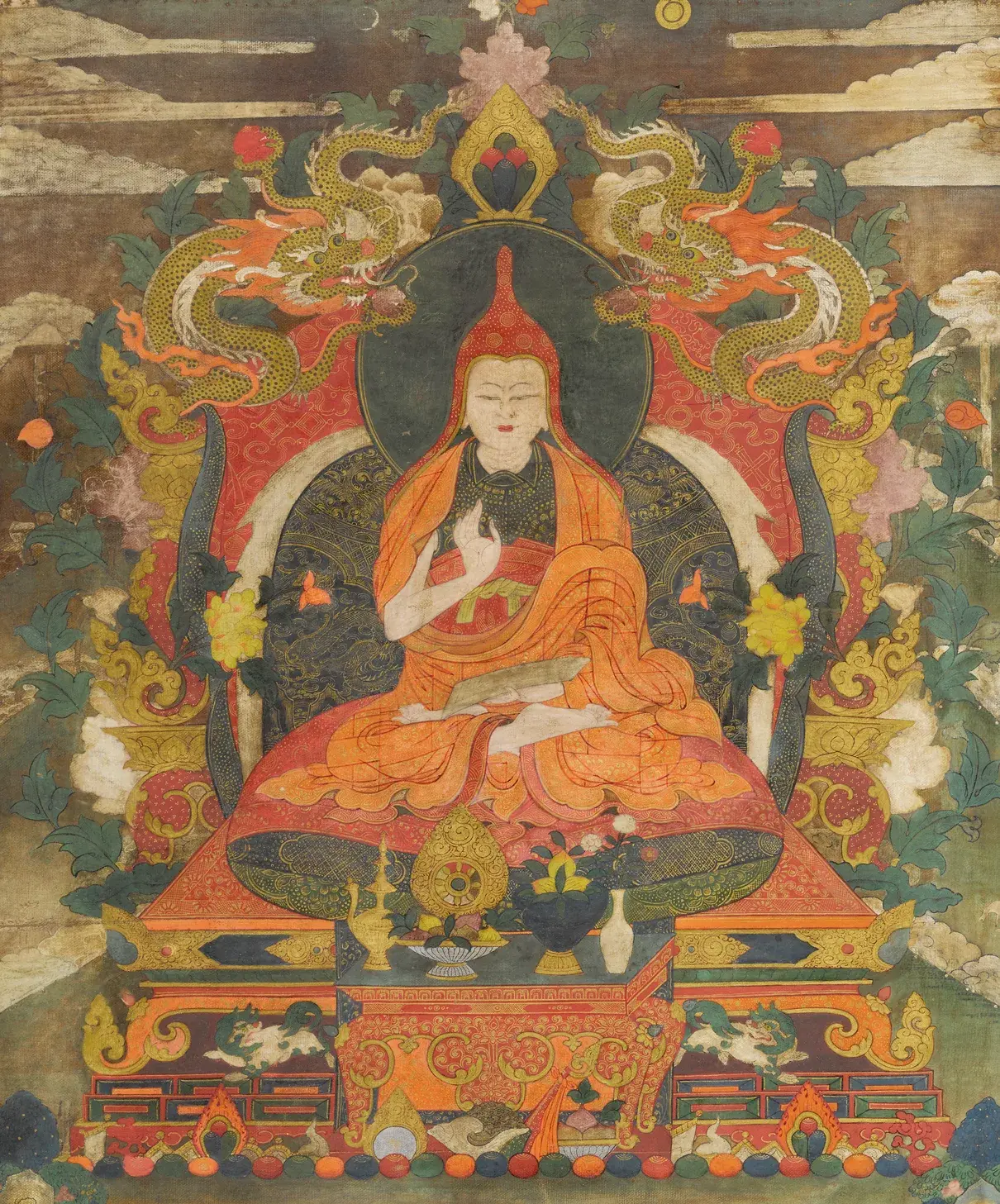 Credit: Himalayan Art Resources
He is one of the great luminaries of Nyingma Buddhism, of which he has notably reinvigorated the monastic tradition. He is an outstanding scholar, considered an emanation of Manjushri, the Buddha of Wisdom. His prolific work includes voluminous authoritative commentaries on the great classics of Indian Buddhism. He is a polymath who mastered countless fields (logic, philosophy, tantras, visual arts, poetry, medicine, engineering...). He was notably the student of Patrul Rinpoche (see above), before becoming himself the main teacher, among others, of Shechen Gyaltsap Rinpoche (who was one of the main teachers of His Holiness Dilgo Khyentse Rinpoche).
Sera Khandro (1892–1940)
Considered an incarnation of Yeshe Tsogyal, Sera Khandro was a great tertön whose treasures are revered by many Nyingma masters. Although humble, she played a key role in the preservation and transmission of a precious body of teachings: she was the companion of Tulku Trimé Özer (scholar, tertön and son of Dudjom Lingpa), and one of the root teachers of the great contemporary yogi, Kyabje Chatral Rinpoche (1913–2015). In addition to termas and commentaries, she has composed texts (currently being translated) full of tenderness, humor and undeniable poetry.
Some of Our Teachers' Teachers
Including some of the great luminaries of the past century.
Dudjom Rinpoche (1904–1987)
Having fled Tibet invaded by China, Kyabje Dudjom Rinpiche, also known as Jigdrel Yeshe Dorje, escaped to India where he was named head of the Nyingma tradition, and thus acknowledged as one of the greatest masters of Tibetan Buddhism. Incarnation of Dudjom Lingpa, he was seen as the regent of Guru Rinpoche—the living representative of Padmasambhava, from whom he is inseparable. He has done prodigious work for the preservation and accessibility of the teachings, and founded important centers in the United States and France (where he spent the last years of his life). He was also a tertön of the highest importance. Indeed, "Dudjom Tersar" is the name given collectively to a huge collection of spiritual treasures revealed by him and Dudjom Lingpa. He is the father of several tulkus, including Thinley Norbu (see below).
Dilgo Khyentse Rinpoche (1910–1991)
Kyabje Dilgo Khyentse Rinpoche is considered, along with Dudjom Rinpoche, to be one of the most important Dzogchen masters of the twentieth century, and an incarnation of Padmasambhava. Both of them played leading roles in the transmission of Nyingma Buddhism—and Tibetan Buddhism in general—in the West. Dilgo Khyentse was one of the closest disciples of Shechen Gyaltsap and Jamyang Khyentse Chökyi Lodrö, and the teacher of many of the most eminent lamas of our time. He spent many years in retreat, but he was also a great builder (temples, monasteries, stupas), the supervisor of a vast publishing program (making available over 300 volumes of teachings), the spiritual advisor to the royal family of Bhutan, the discoverer of treasures preserved by Padmasambhava, a poet and author of various texts and commentaries, and a tireless teacher. In addition, he was an exemplary representative of the non-sectarian (rimé) movement, who put prodigious energy into collecting lineages and teachings that were at risk of disappearing.
Dodrupchen Rinpoche (1927–2022)
The fourth Dodrupchen, Kyabje Tubten Trinle Pal Zangpo (also known as Jigme Trinle Palbar), is a prominent master of the Nyingma tradition. As the fourth incarnation of Jigme Trinle Özer (the heart-son of Jigme Lingpa), Dodrupchen Rinpoche is one of the main holders of the Longchen Nyingtik lineage. He has traveled to various countries and established the Mahasiddha Nyingmapa Center in Massachusetts. He was responsible for the reprinting of precious treatises by Longchenpa and the preservation of important Dzogchen teachings. In addition, he has personally looked after the welfare of over a thousand monks in the Sikkim region. Although quiet and modest, his presence had an immense, indescribable power. Tulku Thondup is one of his close disciples.
Thinley Norbu Rinpoche (1931–2011)
The eldest son of Dudjom Rinpoche, Dungse Thinley Norbu Rinpoche received his training in Tibet and became one of the main holders of the Dudjom Tersar lineage, and one of the most important Nyingma masters of modern times. Recognized as an incarnation of Tulku Trimé Özer (one of the sons of Dudjom Lingpa and the companion of Sera Khandro), he is also considered an emanation of Longchenpa. He lived in Bhutan for a long time and spent about the last thirty years of his life in the United States (the stories of his close disciple Sam Bercholz about this period are very inspiring). He often taught at Pema Osel Ling in California and wrote many profound and luminous books, including A Cascading Waterfall of Nectar, White Sail and Magic Dance. His children include Dungse Garab Rinpoche and Dzongsar Khyentse Rinpoche.
Chögyam Trungpa Rinpoche (1940–1987)
Master of meditation, iconoclastic yogi, prolific author, accomplished multidisciplinary artist (calligraphy, archery, Japanese flower arrangement, tea ceremony, theater, poetry, photography, dance...), the eleventh Surmang Trungpa is one of the most influential figures of the last century, and a leading voice in the transmission of Buddhadharma in the West. Like Guru Rinpoche, his life and work defy all conceptions and conventions. He has founded meditation centers around the world. His books, numerous and varied, could fill a whole shelf. He has inspired many prominent artists, thinkers and teachers.
Lama Tharchin Rinpoche (1936–2013)
Lama Tharchin was a master of Dzogchen and Vajrayana Buddhism. He was the tenth holder of the Repkong Ngakpa lineage, a tradition of "householder yogis," an extremely important non-monastic community of practitioners in Tibet. He spent many years in retreat under the care of Dudjom Rinpoche. His other teachers include Chatral Rinpoche, Lama Sherab Dorje Rinpoche and Dungse Thinley Norbu Rinpoche. In 1960, he fled Tibet on foot with his family, then lived in Orissa, India and Kathmandu, Nepal, before emigrating to the United States in 1984. Dudjom Rinpoche then asked him to turn the wheel of the Dharma. He founded the Vajrayana Foundation, a particularly important organization for the lineage. Lama Tharchin was not only appreciated for his immense spiritual realization, his wisdom, his compassion and his gentleness, but also for his vast knowledge of the ritual arts, dance, music and the philosophical foundations of the Vajrayana.
Direct Sources of Inspiration
Our local coordinator has initiated the Pema Ö project feeling a special gratitude for three teachers to whom he humbly pays tribute here: Tulku Thondup Rinpoche, Lama Sonam Tsering Rinpoche, and Samuel Bercholz. To know more about them, and about our local coordinator and teacher, Vincent Thibault, please visit the About us section.
Guests We've Hosted So Far
To find out about the distinguished teachers we have invited so far, including Samuel Bercholz, Khenpo Sonam and Orgyen Chowang Rinpoche, please visit the About us page.
Other Contemporary Tibetan Teachers Whom We Often Mention
Shechen Rabjam Rinpoche
The seventh Rabjam Rinpoche was born in 1967, as the grandson of Dilgo Khyentse Rinpoche. One night, the latter saw in a dream that his grandson was the combined emanation of the three main masters of Shechen Monastery, who had all perished in Chinese prisons. This premonition was later confirmed by the Sixteenth Karmapa. Rabjam Rinpoche is now a highly esteemed and beloved master, who tirelessly works to preserve the vision of Dilgo Khyentse Rinpoche.
Dzongsar Khyentse Rinpoche
Dzongsar Khyentse, also known as Khyentse Norbu and Thubten Chökyi Gyamtso, is a Bhutanese lama, screenwriter, film director, and author born in 1961. He is undoubtedly one of the most free-spirited contemporary Buddhist masters, one of the most engaging... and one of the most mischievous! He is one of the sons of Thinley Norbu Rinpoche. Recognized as an emanation of Jamyang Khyentse Chökyi Lodrö (and thus of Jamyang Khyentse Wangpo, one of the spiritual luminaries of the 19th century), Dzongsar Khyentse Rinpoche works tirelessly to preserve and promote understanding of the authentic teachings through various organizations renowned worldwide: the Khyentse Foundation, Siddhartha’s Intent, 84000: Translating the Words of the Buddha, and others.
Orgyen Chowang Rinpoche
Orgyen Chowang is a meditation master based in the San Francisco area. Funny, fearless, and generous, he is known for his accessible, passionate, and uncomplicated style. He grew up in a remote village in Tibet before studying formally for ten years at the famed Larung Gar College under his teacher Jigme Phuntsok Rinpoche, who was recognized as one of the greatest Dzogchen masters of the 20th century. In 1990, among a cohort of more than a thousand students, Orgyen Chowang was among the first group of only fifty-five accomplished disciples to be granted the title of khenpo by Jigme Phuntsok Rinpoche. He is also the author of three wonderful books: Our Pristine Mind, From Foundation to Summit, and The Tibetan Book of Success.
Dzigar Kongtrul Rinpoche
A great source of inspiration. Recognized as an emanation of the great Jamgön Kongtrul Lodrö Thayé, he was trained by many masters, including his root teacher Dilgo Khyentse Rinpoche. He is an esteemed author who has many disciples, including Pema Chödrön. We encourage our friends to attend his teachings and support his organization, Mangala Shri Bhuti, where Elizabeth Mattis-Namgyal and their son Dungse Jampal Norbu also teach.
Dudjom Sangye Pema Shepa
His Holiness Dudjom Rinpoche III (1990–2022) was a sublime teacher, a lineage holder of the highest importance in the Nyingma tradition, whose parinirvana shook up the worldwide community of practitioners. We pray for his swift return.
His Holiness the Dalai Lama
Exemplary teacher, erudite, world peace icon, genuine and accomplished practitioner who benefits countless people all over the world, Buddhists and non-Buddhists alike.
Traleg Kyabgon Rinpoche
The 9th Traleg Tulku (1955–2012) was born in Tibet and was the abbot of Thrangu Monastery. He is especially representative of the Kagyü tradition, but he also studied with great teachers of the four main schools of Tibetan Buddhism. Master of Mahamudra and Dzogchen, he was one of the pioneers of the transmission of the Dharma (and in particular the Vajrayana) in Australia, where he founded the E-Vam Buddhist Institute. He also established a major center in New York State and taught in various countries. He is a prolific writer, known for his erudition, his wit, and his ability to clarify the teachings for Westerners, whose culture and psyche he fully understood.
Dza Kilung Rinpoche
Dza Kilung Tulku Jigme Rinpoche was born in 1970. Recognized as the fifth incarnation of Jigme Ngotsar Gyatso (one of the four closest disciples of Jigme Lingpa, see above), he is the head of Kilung Monastery in the district of Dzachuka, Tibet. He has been working since his teenage years to re-establish this monastery as an important center of study and practice. Since 1998 he has divided his time between Tibet and the West, teaching in different parts of the world. Author of The Relaxed Mind, a wonderful meditation manual, Kilung Rinpoche is now based on Whidbey Island near Seattle, Washington, where he founded the Pema Kilaya organization. He also runs the Kilung Foundation, which provides humanitarian aid in his home region. His teachers include Dilgo Khyentse Rinpoche, Minling Trichen Rinpoche, Dodrupchen Rinpoche and Dzogchen Rinpoche.
Other Sources of Inspiration
The Buddhist teachings are extraordinarily vast, and we acknowledge the profundity of all authentic lineages, including those found in the Theravada, Chan and Zen. Just among the Indo-Tibetan traditions, there are many masters whom we could mention, in addition to those who represent the lineages that we are most closely connected to (Dudjom Tersar and Longchen Nyingtik). It is a testament to the power of the Buddhist heritage that it has produced so many wondrous practitioners. Here we will just name a few of these great beings.
We find inspiration in the life and work of the early Kadampa lamas and the masters of lojong (such as Atisha, Chekawa, Thokme Zangpo), as well as those of the great accomplished yogis and yoginis of India and Tibet (including Saraha, Tilopa, Naropa, Marpa, Milarepa, Machik Labdrön and Thangtong Gyalpo), many of whom are connected to the invaluable Kagyu traditions. Like most Tibetan Buddhist schools, we also revere the classic treatises (Nagarjuna, Chandrakirti, Asanga-Maitreya, etc.), and one of the texts that we most often study and refer to is the Bodhicaryavatara by Shantideva.
For more information on these different lineages, here are a few references:
- Masters of Meditation and Miracles by Tulku Thondup (Shambhala Publications)
- The Rimé (Ri-Me) Philosophy of Jamgön Kongtrul the Great by Ringu Tulku (Shambhala Publications)
- Treasury of Lives